Showing posts with label D. Assignment 3: 3MW. Show all posts

Thursday, 5 May 2016

The nature and purposes of research in the creative media industries

Primary Research is research conducted by the first party like the production team or directors/producers. Primary research usually consists of surveying the public and conducting interviews. In my research, I used surveys to conduct my primary research and from that I was able to collect data. Using some of the feedback [like the feedback about covering certain areas] I was able to cover some of the things mentioned like focusing on opinions. 

Secondary Research is research that was conducted by a third party (one that didn't involve the first party) but is still useful in it's data. My secondary research consisted of Steam game ratings since the ratings were of a third party, I was able to collect their overall ratings and compare them with each other. Some places where secondary research can also be performed are within books, websites, Internet, CDs/DVDs, basically where any data can be found without the first party being involved.

Quantitative research is a term used for a large scale data collection. One example I used was Steam where there is an Overall Rating based on reviews from each individual who had purchased and played that game. This overall rating can be classed as Quantitative since there are no specific in-depth answers or rating from the community. Other places that Quantitative research is performed is the performance of a product (like a film's Box Office) or the figures (i.e. 773.8 million iPhones sold since it's release http://ipod.about.com/od/glossary/f/how-many-iphones-sold.htm). The Quantitative research covers an overall rating or review but lacks the intimate details.

Qualitative research is almost like the opposite of Quantitative. Qualitative research is usually based around one or possibly two people at any one time. With the Steam ratings, people leave comments and an overall analysis of their enjoyment/displeasure with the game. The individual reviews show what people liked and disliked about a game. Websites that do exclusive interviews are also part of the Qualitative research since only one person conducts the review and writes their own opinion, giving intimate details and verdicts as the review progresses.


FTL's ratings on Steam, Quantitative on the left with the 'Overwhelmingly Positive' rating while on the right a thumbs up or down and a reason why by each individual person. (click image to enlarge)

BARB (Broadcasters’ Audience Research Board) is a data collector agency where they collect analytics and data on the TV programs and their viewer rate over a day, week, month and year. BARB then compiles these results into helpful data where anyone can view and look at the most popular channels on TV. IMDb works in a similar way where IMDb and the community have built a database of movies, games and TV shows and showcases the full cast and crew as well as production figures and user reviews. 

Audience and Market research is important when coming to producing a product or piece of media. The components of the research consist of geodemographics/demographics (which are things to do with the audience and their geographical location), audience retention and much more. This is to find out more about the kind of market and audience are responding to your research, but also the type of audience you want to aim your product at. For my documentary, I decided to run a survey and had people to respond to it. This way, I was able to reach out to people and ask them these questions and they were able to respond to them to help me gather data. I found that mostly young adults answered the questionnaire, and most of them male. I also found that about half of the respondents didn't know much about the subject and were interested in learning about indie games. 

Production research is the type of research someone needs to carry out before starting actual production. This research can consist of budgeting, viability, locations, equipment and personnel. For my production, I didn't need a budget so I didn't need to consider purchasing anything nor budgeting for the entire production. I was able to lease some equipment from the college Audio Visual room and I was also able to use locations in and around college as well as another extra room outside of college.

Sunday, 1 May 2016

Documentary- My Own Idea and Final Idea

MY IDEA:

My idea is to go to the local Mancroft Advice Project and interview some of the volunteers/staff there and talk about mental health, sex/relationships, homelessness and more. I want to make a documentary to hopefully tell people about the hard work the staff at MAP get up to in helping young adults in their struggles in the community or elsewhere.

TASHA'S IDEA (FINAL IDEA):

Tasha's idea was to create a documentary about Indie Games, focusing on the differences between both AAA games and indie games and why people prefer one over the other. 

I decided to go with Tasha's idea since I thought it was a much more viable option.

Questionnaire Results and Analysis

Create your own user feedback survey

Compiling the data, I found that the age range was very diverse. There was no predominate age range or any correlation in age-respondents to be found, however the data seems to lead towards the younger ages rather than the older ones. The highest age was 33 and the youngest were 16, hence the starting age.


From the results above, it seems that the majority of the respondents were male while the rest identified as female or Non-binary/Agender. Most of the respondents were also students followed up by teachers and then the Unemployed and Retail workers.


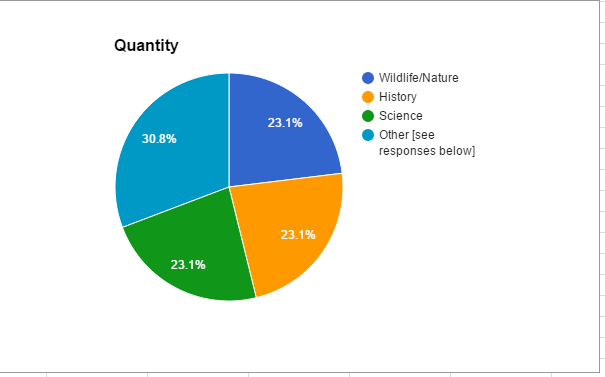
From the responses above, we can see that Wildlife/Nature is one of the favourites along with Science and History. Other documentary preferences involved all of the subjects, multiple subjects, music and art.


From the responses above, when asked what they knew about Indie Games, most seem to understand that the Indie genre is focused more on the independent publishers/developers while few know very little about them.


When asked what Indie games or favourite indie games that the respondents had played, they were more happy to tell if they had or not. Some talk about [or even imply] that they have played a lot of indie games while some have not played indie games.


When asked if they preferred High budget or indie games, most of the respondents said they were undecided or neutral about it.  Within the 25% that had a preference, 66.8% of the respondents had a preference for High Budget Triple-A games while 33.2% said they preferred Indie. From this analysis, we can possibly aim this documentary at the Undecided respondents to possibly educate them.


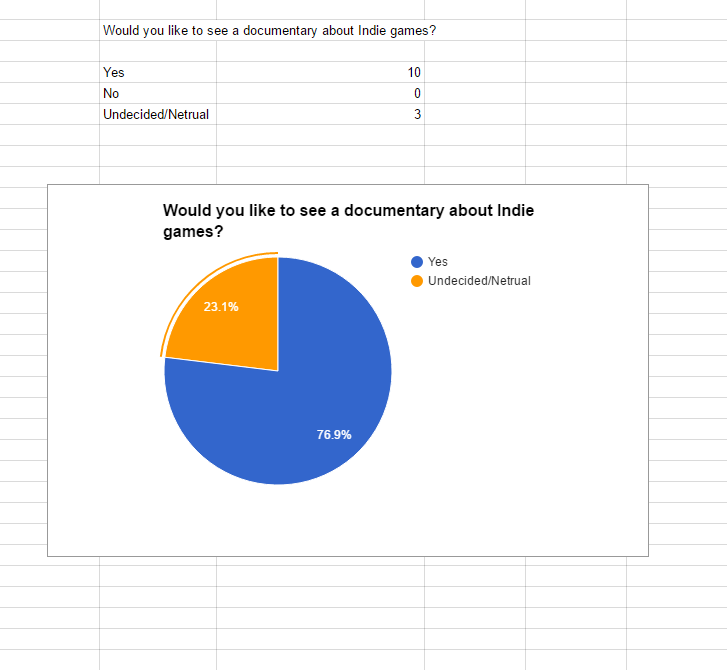
When asked if the respondents would have liked to see a documentary about Indie games, a large percentage said yes, while the rest stayed Undecided. We then asked why; we can see that there are people who would want to be interested in learning about this market and some even say that there isn't any documentaries on Indie games and it would be "cool" to see one.


After reading a short description of the aim of the documentary, about a quarter of the respondents were extremely interested while the other 75 percent we're moderately-very interested in the documentary idea. From this, we can see that there is an audience that this documentary will appeal to. We asked the respondents why and this is what they said:


From this, we can see that there is an interest in different areas or general areas, so this would be something to focus on during production.


When asking for feedback, some said there was nothing to add. Some respondents would just like to learn about history or peoples opinions while others suggested looking into very specific parts of the Indie industry like their gameplay or development. I will consider all points here.

I compiled the data using Google Sheets. The sheet can be found here: https://docs.google.com/spreadsheets/d/1rhFGmnyIlSRXOIJ1Z8iewO1VO5Cy9slzYuKabtCSRIM/edit?usp=sharing 

For my secondary research, I went to store.steampowered.com to look at some rating for indie games. I found that FTL and Papers, Please were among the higher rated indie games along with 

Monday, 18 April 2016

3MW Proposal

Tasha had the idea of doing a documentary about independent video games. We wanted to educate the public about what an indie game is. We want to make a documentary about Indie Games. We want to focus on the comparisons between Indie developed titles to higher budget AAA (triple-A) titles. We want to focus on how the development process can differ as well as team size and style/feel of the game. 

The genre and format of this documentary would be very brief but concise; how the indie games became popular and how the differ from AAA products. We wanted the documentary to be observational since we want to focus on peoples experiences or opinions. The main and secondary demographic for this documentary would be about 60% male and 40% female since some statistics show that this is the average player-base for video games. The primary and secondary demographic would be aged between 15-30 since there are some of the older indie developed games like bootlegs or unofficial games.

(https://en.wikipedia.org/wiki/Women_and_video_games)

We hope to educate and inform the gaming community on the differences of an indie game to a AAA game. We also want to inform the community about when indie developed games started or why someone likes these types of games. 

We can film this documentary in college where we can ask students (whom fall in to the demographic) and I am able to film one other person in my own time at an alternative location. We only need people in the documentary who have an interest in indie games or have a strong opinion about them.

Some example questions:

"Why did you get into indie developed games?"

"Do you prefer indie games or AAA games?"

"What is your favourite game of all time?"

"What's the difference [in your opinion] between indie and AAA?"

We would need a camera, tripod, microphone, and a room to film the documentary in. We can get the camera equipment from AV in college.

Thursday, 14 April 2016

3 Minute Wonders. What are they?

A 3 minute wonder is a short video/documentary about a specific thing or person. The phrase was coined by Channel 4 in their segment which was called 3 Minute Wonder. People would submit their 3MW to Channel 4 and they would broadcast it to the general public. A 3MW is to showcase an insight into someone's lifestyle, hobbies or thoughts into a particular subject. Topics covered in a 3MW can range from peoples hobbies to the thoughts and feelings of a particular person or even into large events such as a party or gathering.

Karl Pilkington- Nature

In this 3MW, Karl talks about nature and wildlife whilst he is visiting a zoo. Karl talks about how the icecaps are melting but there are too many fish so 'they' should take fish out of the sea and he says that it is basic science [since he was talking about displacement when you put solid objects in fluids]. Karl also talks about the Sloth and how lazy it is but he talks about how we save them even though they continue to do nothing. Karl also talks about how the animals don't look abused/stressed since he thinks it's not cruel to keep animals in the zoo. Karl talks about animal testing for drugs too and he says that it would be okay if the specialists gave a monkey some aspirin if it had a headache. 


One Note Music

Two teens from South London are trying to create a new form of music called One Note Music. In the film, we can see the two teenagers argue over what each song should be a Middle-C. All the lyrics also contain the word One. The two teenagers follow the "connoisseur" and the creator of ONW who is from America.


Last Supper

In this documentary, a death-row inmate is talking to the director about death row. He talks about the last meal which is the infamous meal before the authorities execute the prisoner. He talks about how it would be difficult to choose what kind of meal he would pick for his final meal. The inmate also talks about how he is the only guilty one but he isn't the one who is suffering; his family is suffering way after his execution.


In one day, Channel 4 shows an average of 10 different types of documentaries per day, some being late a night and others during daytime television. This suggests that adult men like to watch these types of programs, but some programs are aimed towards the female demographic with things like Gogglebox and more. BARB figures show the following result of last weeks figures:

                 Daily Avg. Reach      Weekly Avg. Reach  Avg. weekly viewing  share
                  000s        %          000s         %         hrs:mins per person   %/100
Channel 4 | 11,504 | 19.47   | 34,120  | 57.71   |        1:24          |  5.49

This shows us that about 11 thousand people watch Channel 4 everyday and out of all the programs Channel 4 gets 5 and a half percent of all viewers on UK television. This suggests that there is a small audience that can be reached that are interested in C4s documentaries.

Wednesday, 23 March 2016

Introduction to the News

http://www.bbc.co.uk/iplayer/episode/b073qpnv/bbc-news-at-ten-22032016

BBC News at 10 22/03/2016


The news covered is the Belgium Bombers and the terror and destruction it has caused and the ISIS group has claimed responsibility. George Osbourne has admitted he made a mistake for proposed cuts to disability benefits and Barack Obama and the Cuban President sitting together watching baseball.


The opening sequence is authoritative and it feels factual (see an example introduction below). The opening sequence mostly consisted of the Belgium Bombings and the effect it has had on people and the story took the most time in the opening sequence followed by the shorter 'less significant' stories. This is the reason because the attacks affect us but the story also operates on a larger scale since the group behind the attacks are the ISIS group. The reporters also mentioned that the group had also taken responsibility of the attacks and that they threaten to attack other areas. Obviously, the Belgium terrorist attack was covered most within the opening sequence with two shorter summaries of what was happening elsewhere in the world. The George Osbourne report showed that Osbourne had made a mistake and that he was apologising for making that mistake. Barack Obama was shown at a baseball game with Cuban President Raúl Castro, enjoying the atmosphere.


The Anglia documentary had shown us how the news runs on an average day 'behind the scenes'. The documentary had told us that there are two News Readers, usually one male and one female. These news readers are often above 25, having professional looking outfits like a suit or a smart work dress. Often there is also a weather reporter and an analyst. A news reader needs to have the ability to put the approved [by the Editor] stories together in a type of script and then report to the viewers on what is in the script. A News Reader needs the skills to be able to read news in a calm but authoritative manner. The News Reader [before the broadcast] must quickly edit their scripts in order to accompany breaking news or new information. 


News ordering is a system where the news stories are ordered in a particular way according to their topic, audience and length. This is also known as a running order. The reason for this to exist is to appeal to the audience since the order helps break down information with the most important stories with the most air time and in some ways the order makes the news a little bit more exciting. The running order is managed by an Editor. The first and most important story (also known as the Lead Story) is the longest and most importance. The Lead Story is much longer than the others because it is the story that holds the most amount of information. The Lead is selected based on relevance, recency and the duration of the story (i.e. how often there will be new information about that particular story). The news is then categorized into small groups consisting of relevant and similar topics. This is called a 'roundup' where there is a roundup of similar news in a short space of time. Time is essential in the news. The news team must always get relevant and up to date information in order to inform the general public. If the news wasn't up to date, it wouldn't be relevant. A 'slow news day' is a day where not much substantial news stories had happened, so the news has to cover the less important/more trivial news stories. The final story, or the "and finally" story is meant to give a light-hearted ending to the news that makes the audience feel good. Usually the story is about charity fundraising or the like. Even shows like Russell Howard's Good News has adopted a similar segment called 'It's Not All Doom and Gloom' where Russell shows the audience about an inspirational and light-hearted story. The News Values constructed by J. Galtung and M. Ruge are a list of story conditions which is ordered in a hierarchy of importance. This is to order stories with most importance first and the more light-hearted stories closer to the end. The values are listed below along with an example for each.

http://blog.which4u.co.uk/wp-content/uploads/2013/01/itsnotalldoom.jpg
Russell Howard's Good News 'It's not all doom and gloom' section.

  • Negativity- Stories involving things such as death and war are rated higher than positive stories.
  • Proximity- Geographically relevant to the audience.
  • Recency- How recent the story had occurred. Breaking news can't be covered in newspapers but 24 hour news channels are able to utilize breaking news.
  • Currency- The opposite of Recency. A story that is usually reported on for a prolonged amount of time even if nothing happens.
  • Continuity- Stories that are likely to have an impact on the audience for a longer period of time.
  • Uniqueness- A story out of the ordinary and seems different to other stories.

    http://www.theguardian.com/environment/2016/mar/20/eccentric-choices-surface-in-quest-to-name-polar-research-vessel
  • Simplicity- Stories that are easiest to explain.
  • Personality- Stories that revolve around a particular person, whether it would be a celebrity icon or member of the public.
  • Predictability- How predictable the story can be. Say there was a war and there were civilian/unexpected casualties, that is quite predictable.
  • Elite Nations or People- Any story that covers a powerful company/organisation or person in charge of a nation.

    http://edition.cnn.com/2016/03/22/politics/obama-cuba-baseball-diplomacy/
  • Exclusivity- A story which if one news organisation gets the story first, the organisation tends to rate that particular story higher

    http://www.maldonandburnhamstandard.co.uk/news/south_essex_news/14415863.EXCLUSIVE__Interview_with_star_Jordan_Gray_after_being_voted_off_BBC_s_The_Voice/
  • Size- The bigger the investment of money into the story makes the story more important as well as the scale of the story affects a scaled number of the audience.


The style of outfit Huw Edwards was wearing in Belgium was a suit with tie. One reason for this is that the news reporter must look and act professional while maintaining an authoritative look. He was also wearing a large coat to suggest that the temperature was cold, but the coat was not unprofessional. Huw Edwards, aged 54, male. As stated before, it was Huw's job to talk and inform the general public on what was happening in Belgium and how it has affected the people of Belgium and the terror the attack had ensued. It was Huw's job to stay professional and calm whilst reporting on such an event. On any other day, it is Huw's job to read the top stories of that day, including big events or disasters.  Since the attacks was the biggest event, it had most time within the newsreaders script. Reporters had also interviewed citizens of Brussels about the attacks. The people represented were true to themselves and it seems that there was no alternation later on. The story had shown the fright of the public over the terrorist attack. I felt sad for the victims and witnesses of the attack since terrorism shouldn't have a place in modern society. I felt scared for the people interviewed. The story followed a vague construction since it was breaking news. The reader and reporters talked about the devastation the attacks led and how the general public reacted and then talked about how the authoritative bodies reacted.

Biases-

Bias through selection and omission: A news editor is able to show bias through their writing in a news story. Because of the biases of the editor, the editor can manipulate the facts to possible paint the subject in a negative light by missing out key information on purpose and extracting certain information from their notes to make the subject seem negative.

http://www.theguardian.com/politics/2016/jun/11/david-cameron-brexit-eu-referendum-listen-jeremy-corbyn This article could have been written for a pro-Remain campaigner, siding with Corbyn and Cameron since the article talks about how the Leave campaign is a bad idea.

Bias through placement: this means that more important stories are rated more favourable and thus much more popular than other stories creating an inequality in importance of the news. The image below shows that there is a geographical bias where all of the versions are not the same. Image can be found here: http://images.politico.com/global/2012/02/atime.jpg


Bias by headline: this means that a headline can be misleading and can convey incorrect information. The headline is important because it is the first thing a consumer recognises. In this example, we can see that because the U.N. in Iraq was bombed it was of much more significance because there could have been US or European workers there but a suicide bomber threatens a Mideast road map is of less significance even though they were both about suicide bombings. The second article is probably rated less important because it was only a threat and not an actual attack.


Bias by photos: this is when a newspaper or editor chooses photos to make someone look bad or good. An example would be to make a conservative newspaper show a bad image of a Labour leader.


David Cameron shown being authoritative and strong while Ed Milliband is shown being silly and pulling faces.

Bias through names and titles: this means that the news and media uses different language and labels to describe someone in either a more positive or negative light.

an example being "Jeremy Clarkson, previously sued over assault allegations, starts new TV show" or changing that to "Jeremy Clarkson, angry TV host, starts new TV show."

Bias by choice of words: this means that the use of language can portray someone or something in a positive or a negative way. The use of language can influence opinions.

'Imagine him in the White House – he’s like someone who got lost from the tour'

http://www.independent.co.uk/voices/jeremy-corbyn-imagine-him-in-the-white-house-he-s-like-someone-who-got-lost-from-the-tour-a7019811.html

Monday, 14 March 2016

What is a documentary?

A documentary is typically a real and the events are true and had happened. Although some scenes may be recreated, this gives the documentary its authenticity. Documentaries are understood to be non-fiction and real life and usually a director or filmmaker usually just observes and/or makes opinions or narrates. There are some different types of documentaries where the director is a part of the documentary and interacts with the people or things in the documentary and there are some documentaries that are a series of images and film without narration or interviewees.

Expository Documentaries are the typical documentary. Sometimes the documentary will start with the filmmaker or director introducing the subject of the documentary and the rest of the documentary are usually filled with interviews with significant people, icons or celebrities. The filmmaker usually only asks questions and sometimes talks to the interviewees or explain things. In this documentary, the staff of NaughtyDog talks about how The Last of Us was made and how they wanted to make the game very realistic and "grounded". The documentary covers many aspects of video game making, but it mainly focuses on the process of making The Last of Us. In the sound section, the sound engineers talk about how they made the iconic Clicker noise; they got voice actors to make some weird noises and even the sound engineers would make some noises and then they compiled the sounds together to create the sound.


Observational Documentaries are the type of minimal editing documentaries. Usually the camera is recorded for a long time along with the audio but little to no editing is made so the footage is unedited and abiding truthfully to what actually happened. One example of this is Titicut Follies, from the director of Frederick Wiseman. Frederick Wiseman had his cameraman film these prisoners in the different prison/hospital environments. The footage feels genuine and seems to flow really well since we can see that the footage is pretty much unedited and all the sound was what happened when they were recording. 


An Interactive Documentary is a documentary where the filmmaker or director is on camera, interacting with the people or things within the documentary and where the presenter is part of the documentary where they (he/she) shares their experiences with someone or something. One example of Interactive Documentary is Louis Theroux's Weird Weekends - UFOs. Louis Theroux goes to South America to visit some UFO Hunters. Louis explains and talks about his thoughts and feelings and asks questions about what he thinks and wants to know. What makes this documentary interesting is that Louis and the audience don't know about these things BUT we want to learn what these other people think etc. Louis Theroux does try and uncover truths and he is considered to be a Relexive Documentary Filmmaker, but he is also considered to be Interactive.


You can watch the full documentary here: 


Reflexive Documentaries are much like Interactive documentaries but the filmmaker/director/writer will go one step further to reveal a truth or uncover something about a subject although the filmmaker doesn't need to be present in the documentary but can still heavily imply something. In this documentary, we can see the devastation to Pripyat, Chernobyl and see how the nuclear disaster had affected this city. The footage shows what was once a city filled with life but now it lacks life. The documentary shows how a city ends up after a disaster as big as the Chernobyl nuclear blast.


A Preformative Documentary is when the documentary focuses on the raw emotions of people or things. This is a much more dramatic outlook for this type of documentary and the documentary can mean different things to different people. These types of documentary are usually perspective and autobiographical. In this documentary, it shows black gay men trying to overcome racism and homophobia. 


In conclusion, I feel that showing true information about a person or subject is vital for getting across a possible unbiased view. I also think manipulating the evidence or the facts to suit ones needs is unethical and should not be done for a documentary, especially if it is reflective of real life. Although some documentaries do this for a positive impact some documentaries do this to evoke a negative opinion or bias.

Monday, 7 March 2016

Documentary formats: texts

Workers Leaving the Lumière Factory:

This is a short video on workers leaving the Lumière factory at the end of the a work day. This documentary was filmed in 1985 and showed many workers leaving. This is thought to be very true since no editing is made here and the film is truthful in terms of realism. There is no cuts or altered information to make the film unrealistic. Although the factory workers only leave to the left or the right I think this film is still believable since it makes sense that everyone is leaving to the left or right. 

http://www.vervemagazine.in/wp-content/uploads/2014/01/lumiere-3.jpg

NightMail:

NightMail is a short documentary about how post gets from A to B. This film is a little more unrealistic in terms of information given. Some of the shots and timings have been altered, like the aerial shots were made by using train models and the shots within the stations were cut together even though they would have taken a while between each. The film uses match-on-action shots which is also adding to the unrealistic feeling since the camera was moved and the action was performed again. Some scenes were cut down too, like the phone call at the beginning only had shown the one letter/package be talked about rather than a whole batch.

Bowling for Columbine

In this documentary, Michael Moore investigates the gun laws and how easy it was to obtain a gun in the USA. Moore went to a bank to open an account and get a free gun. At the beginning, Michael decides to act immature but later on he becomes mature and serious. One reason for this is so that he can put them in control but still maintain control. This documentary had been edited down and Moore even came back a few days later after his background checks had been completed but wore the same clothes and looked the same from before. This is editing the documentary and manipulating the realism but Moore does this to shock the audience on how he got a gun so quickly. 

Although the documentary has been manipulated, it has been manipulated in a way where the audience gets a shock and the information is clear and concise. Michael Moore even decided to wear the same clothes so that it gives the illusion that he got the gun on the same day

When Louis met Jimmy and Louis and the Nazis

When Louis met the Nazis was a documentary about Louis Theroux visiting some Nazi's in America including a Nazi family consisting of two parents and two children, a White Revolution activist and a family of 'skinheads'. The documentary felt real since all of the events took place and all the emotions etc felt real, especially when the skinheads kept asking is Louis was a Jewish follower. Again, manipulation in time had been used but to keep the flow of the documentary and to keep the information clear and concise.

In the When Louis met Jimmy documentary, Louis had consistently asked Jimmy about his paedophilic rumours but Jimmy would deny and continue to talk about something else. This documentary felt real and authentic because of how later on Jimmy was found out to be a paedophile and he was exposed, but the way Jimmy had reacted to Louis' questions were authentic and real. 

The Thin Blue Line

The Thin Blue Line was a documentary about Randall Adams and David Harris and the murder of a police officer in Texas. 
We are the Lambeth Boys

This documentary followed a group of boys and girls through a general week of their lives. This documentary feels less authentic because some scenes appeared to be a little scripted and set up and some shots had suggested


Thursday, 11 February 2016

The Act of Killing Blog Post

1.What is the film about? What happens?

The film is about the militia overthrowing the Indonesian government. The film follows Anwar Congo and his friends and they all document what happened back in 1965 where they were allowed to kill and murder. The director, Joshua Oppenheimer, allowed Anwar and his mass murdering friends to create films and musicals to show how they killed people. During the film, Anwar becomes more aware of his actions and by the end is very sad about what he had done, going so far to begin to throw up near the end. Anwar wanted the films to resemble western films from 1965 and 1966 which were the films Anwer enjoyed the most.

2. Was there a scene where it stood out for you? What was it and why?

The part where Anwar is watching his scene where he gets tortured and strangled really stood out for me. During the filming of that scene he is then watching, Anwar shows that he was very sad and he could barely move. Later on, he talks about how fear had overcome him and that he was really scared, and he had then realised that's how the people he tortured and killed felt but worse, and Anwar felt sad about what he had done. He cried because he had realised he killed so many people with the same emotions he felt during filming, but he realised they felt it far worse than he did.

3. Did the filmmaker have a presence? How and in what capacity?

Joshua Oppenheimer was never really on screen. He would talk and interact with people on screen but he was never seen. Anwar and his friends would also talk to him and Joshua would ask questions back.

4.What two honoured documentary filmmakers had executive producer credits on the film?

Werner Herzog who is famous for directing Grizzly Man and acting in several TV shows like American Dad! and The Simpsons, and Errol Morris who is famous for directing The Thin Blue Line and The Fog of War.

5. What was the follow up/'sequel' to the film? Find the title and describe what it was about.

The sequel was called The Look of Silence. The film was about a man who's brother was killed in Indonesia in 1965, and this man has confronted the killers but they had shown no remorse.


Wednesday, 4 November 2015

The Pre Production Process Essay

As a group of three, we produced a 90 second film short about a super hero. This was for the DepicT competition, which consists of many short films under 90 seconds all submitted by other students and other smaller media production companies. We worked scrupulously together to create an end product, focusing on pre-production so that all of the details and ideas could be discussed in depth. After post production, we decided to share our video via YouTube and some other social media platforms. We decided this because of how accessible YouTube is to the general public and how the other social media websites are also very accessible to a large number of people. By posting our product onto the web, it immediately becomes available to the world. A lot more of the studio funded films are released within the mainstream cinemas like Odeon and Vue. Cinema City shows more of the indie and art videos within the Norfolk area, showcasing new films from the more independent production companies.
                                                                                              
For our DepicT competition, we were given £5 by the Sixth Form College, East Norfolk. However, there are many different kind of income sources when it comes to making films, usually ones that are feature length. Sources of income include:

Funding is one large aspect of film making. There are many different kinds of funding and can range from small donations to large sums of money.

          -Crowd Funding (Kickstarter/Indiegogo/Patreon)

                   One example of crowdfunding was the film ‘Ashens: and The Quest for The Game Child’. The film managed to raise over $70,000, but only managed to receive about 41% of their desired budget of $180,000. The film still managed to be released on YouTube and then later released on DVD and Blu-Ray. The film was well received from other YouTube figures and also fans of Ashens.

Corridor Digital is a YouTube channel specialising in making short films. Instead of starting a Kickstater project, they are on a website called Patreon. Patreon works similarly to Kickstarter and Indiegogo, but the person creating the content gets paid every month or every project they finish. People who pledge get added bonuses from the content creators, giving a more incentive to pledge.
          -Private Investors
                   One excellent example of a Private Investor is from Megan Ellison’s production company, Annapurna Pictures. Megan has produced such films as Her, Zero Dark Thirty and American Hustle. As of writing this, she has 26 Producer credits listed on IMDb. She was born into a very wealthy family and has used that money to fund these films.

          -Self Funding/Competition
                   Self-funding is one way to create a film. Some people who start off their production can self-fund with some savings, or everyone in the production can chip in to some of the fund. Usually, some people enter a film making competition. DepicT is one example of a competition. The winning prize is a cash sum, so that cash sum could be used in another production down the road for the winning team. One self funder is Kevin Smith with his trilogy named Clerks. Smith funded the three films by himself which then went onto making profit. https://en.wikipedia.org/wiki/Kevin_Smith


           -Banks
                   Banks are a source of income. Loans are a viable option to getting the money needed for the production. This ties in closely with self-funding. If the production doesn’t have all the money in that moment, they can go to a bank and ask for a loan.

          -BFI Film Funding

The BFI (British Film Institute) Film Fund is “the largest public film fund in the UK”. Every year, BFI invest over £26m of Lottery funds to support film development and production. According to their back project search page, Over 1600 projects have been backed by the BFI, including £92,500 given to the upcoming Glasgow Film Festival in 2016. The BFI allows newcomers and professionals to create films by funding their projects, large or small.

          -Studio Funding
                   Studio funding is one of the most common ways to fund a film production. A production company like Warner Bros, New Line Cinema or Walt Disney Pictures will usually fund their own productions.

Requirements and budgeting is a large aspect of film making. Budgeting is one of the most important steps in the pre-production section of the entire process. Budgeting is very important when working within a tighter budget. There are lots of different aspects of production that need to be purchased or hired for the production to become a reality. The list can consist of, but is not limited to:

          -Props and Costumes
          -Crew and Casting
          -Set hiring
          -Set builders
          -Talent, Background and Main
          -Accommodation and Travel
          -Camera and Lighting
          -Hardware and Software (usually for post-production)
          -Food and Drink facilities.


For our project, we had £5 given to us and we had to spend that on props, costumes or something else. We had most of things required for the production, including props and most costumes. We had to buy a cape for the super hero parts in the movie. Our cameras (Canon 700D and Canon 550D) were supplied by East Norfolk Sixth Form College, but we had to sign out the equipment, essentially hiring them. We needed to spray paint two of the props, luckily we were able to do so within the college. An example of studio funding is the Harry Potter film series. All films were estimated at a budget of $125m, from the first to the last film.


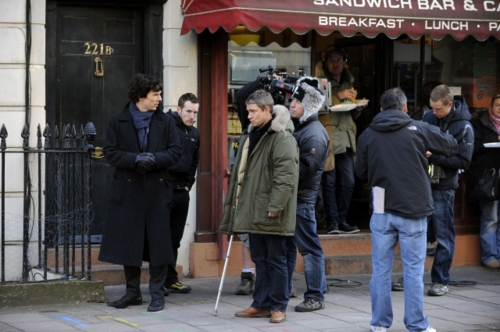
Personnel is also a large aspect of film making and production. For a low budget short, we had to each become the directors, producers, actors, editors and more. For a slightly larger (but still) small production, there would still have to be auditions held and the cast, crew and post-production crew hired or volunteering. In a TV programme, there are producers and the producers usually have to go look for a writer. When the writer is selected, they must then write the screenplay and then talk about the screenplay in depth with the producers. The team now go find the rest of the cast and crew by going to agencies and different media companies to see whether they would like to take part in the project. Because of this, the team is now a lot larger, having dedicated directors, writers, actors, background artists, crew and runners. In a Hollywood production, the amount of people needed is scaled up, with more editors, writers, producers, mainstream actors, background artists and more. A Hollywood production would typically be the largest in terms of production team scale. All three would [possibly] consist of a spokesperson or spokespeople and given the role to interact with the general public. BBC Sherlock was created by Hartswood Films, consisting of nine people. The TV show was created with a large crew because of something called outsourcing. Outsourcing means that the production company went out and recruited the other parts of production, including actors, camera crew and the full crew.


Set of BBC Sherlock

For our production, we had 4 people in total. 3 of us were the main group for media and the 4th actor was a friend. The three of us were responsible for directing, planning, producing, budgeting, risk-assessing, filming and editing. We had to do everything in the pre-production, production and post-production stages. Two of the three from our group were experienced more so in editing. Though, the editing was down to two of us, we all had a similar amount of time using the editing suite. All three of us have had at least some experience with film making, but again, some had less experience than others. A friend named Peter was able to offer his acting skills to our production. He played the true antagonist to the film. At one point, we had a subject friend to work the camera while we were all in shot. Thanks to him, we were able to get some shots we couldn’t have achieved beforehand when the camera needed moving and there was no one to operate said camera.

Time is very important when we planning to make a traditional and conventional media text. Not sticking to deadlines is a very unprofessional act to do and can deter people or groups from funding your project. The release date of the film could be pushed back and more money would have to go funding the cast and crew for more days. If the deadlines are not met then there is a possibility of you being fired and your reputation damaged indefinitely. For our production, we were given three weeks; week one was for pre-production, one week for filming and one week for post-production. We had one week for pre-production, one week for production and one week for editing. During filming, we weren’t able to film any of the scenes since the weather was bad. This would have ruined continuity and could have damaged the equipment we had. It could have made our filming areas dangerous since the mud was wet and there was a danger that one of us could have fallen over and injured themselves or the equipment could have broken. For this, we were allowed another day to make up for the filming that we could have done on the raining day.

As said before, we were able to essentially hire out most of the equipment from college using our student cards. As stated before, we used a Canon 700D and a Canon 550D during filming, but we also used a tripod, a camera mounted microphone and a Zoom microphone for voice over. All of these were hired out from the college and used within the production process. We were also able to use from fans from the college that we got permission for. We were also able to use our own props from home and we also supplied most of the costume. Some bigger productions (like in a university) possibly have the same method, using their student numbers to hire out equipment from the university themselves. Some usually go to a company where they hire out the equipment for a fee. One company, Millennium Studios, hires out professional equipment for a certain amount of days or lets you use their facilities to rehearse, record or hire workspace. We were able to use the green screen room at the college and use the public property across the road. Hiring a set or stage for one (10hr) weekday costs £600 and £60 thereafter. This price excludes lighting, electric and more. Since we filmed in public property and with permission within college, this is one example of utilising our budget and making sure we use little to none of our budget for accommodation etc.


When deciding on the story board and shot list, location was very important to decide on. We went out in a pair and looked at the green screen location. We also went to the park across the road and decided what places would be best for the production. We picked the green-screen room because of how we had a lot of freedom when it came to deciding what shots we should do for the green screen clips. We chose the field/park across the road from the college because of the open area we could use. We could also use the bench that was at the back of the park. Since the outside shots were on a field, the mud could become wet and slippery which could have been a risk. We were able to assess all risks that correlate with the field (uneven ground, wet ground) and within the green screen room (tripping over equipment, plug sockets). We were able to assess all risks with the Risk Assessment we created. We suggested to take care when moving equipment and traversing the set.

For the film, we needed a lot more material to work with. For this, we went to two main websites: incompetech.com and freesound.org. Incompetech is a website full of royalty-free music. We were able to get the music tracks from incompetech and use them in our short film. For sound effects, we went to freesound.org. For some sound effects, we mixed them together to make them sound more realistic. We also had to find some royalty free visual effects for our film. For this, we searched on YouTube and used the keywords ‘royalty-free’. If we wanted to use the official soundtracks from certain films or TV series, a license fee usually needs to be paid for us to use said materials, but luckily we were able to find music on incompetech.com.


Legal issues are a big factor within our project. Because of this, we did not want our video taken down or the college being taken to court because we did not have the rights to use the materials. From gov.uk:

Copyright protects your work and stops others from using it without your permission.

You automatically get copyright protection when you create:

-original literary, dramatic, musical and artistic work, including illustration and photography
-original non-literary written work, eg software, web content and databases
-sound and music recordings
-film and television recordings
-broadcasts
-the layout of published editions of written, dramatic and musical works
You can mark your work with the copyright symbol (©), your name and the year of creation. Whether you mark the work or not doesn’t affect the level of protection you have.


What this means is that if someone takes our work and uses it and takes credit for the work, we have legal grounds to sue the person who republished our work and took credit for it. For example, if someone reused our film and replaced the music and with their own sound effects and soundtrack, we are still allowed to sue that publisher, however, if someone uses the same soundtrack as us we are not allowed to sue the new publisher because the music is from another author and is copyright-free. For our production, we had to avoid using materials from other productions like images, sound and video. We had to find alternatives for music and sound on freesound.org and incompetech.com. For images, we were able to use some royalty free images and we were also able to use a picture of the moon since any media based material from NASA is allowed to be re-used since it is in the public domain.

“NASA still images, audio files, video, and computer files used in the rendition of 3-dimensional models, such as texture maps and polygon data in any format, generally are not copyrighted. You may use this material for educational or informational purposes, including photo collections, textbooks, public exhibits, computer graphical simulations and Internet Web pages. This general permission extends to personal Web pages.”

More can be found here:
Clearance is the act on showing your film in a public area like a cinema. We are only allowed to show our film when we have written permission from everyone in the production (actors).

Completion guarantee is a system where the production team is given a budget based on an incomplete short. The more promising ones is handed over to the BFI for them to decide whether or not the short would be guaranteed to be completed. If so, the BFI can then give money to the production company, respectively.

There are two big regulatory bodies; OFCOM and the BBFC. OFCOM is a communications regulator. What this means is that      they are responsible for maintaining the communications throughout the UK. They provide broadband, TV and radio programmes and more.  For the BBC, the BBC Trust regulates the content on the BBC. The BBC is independent of the BBC Executive board, and the employees at the BBC Trust are hand picked, then are given instructions from Ministers and Her Royal Highness, The Queen. The BBC Trust is more public-interest oriented. This means that they can regulate the content as the audience see fit, however, OFCOM is an independent regulator and they are oriented in a way that keeps communications active and online. The BBFC (British Board of Film Classifications) is about the age ratings of film, TV and some video games. They are responsible for judging the media and deciding what classification the film deserves. This stops children from viewing media that is considered adult, like violence or sexual scenes.


The different certificate ratings from the BBFC

A trade union is:

"An organized association of workers in a trade, group of trades, or profession, formed to protect and further their rights and interests."

What this means is that a group of people come together as a group and they defend their rights and privileges in that trade. For instance, there is a teachers alliance who, upon something that could affect them, come together to petition or stand against unfair changes to protect each teacher within the alliance. In the media industry, PACT is an association that helps represent many different media companies within the UK. PACT offers legal advice to said media companies to help ensure they are not having their content stolen and that they can stay clear of copyright and other legal actions against/for them. BECTU on the other hand offer support on the job side of the media industry. BECTU offer Improved pay and work conditions, protects your jobs and many more. BECTU can also ensure that you are being treated as an equal individual in the work-space. 

Public liability insurance is an insurance where, if the crew were to be injured or the general public, this insurance will cover legal costs and compensation.

A trade association are organisations funded by other businesses from a specific industry. There are many trade associations around the world, including BIMA. BIMA have been operating since 1985 in areas that help and support the British digital industry and helps encourage a new generation to get into the industry. BIMA provide market statistics and more to help companies tailor their products to the audiences needs.